Rubric · Footwear
Sports shoe types, surface decides the build
The surface decides the shoe.
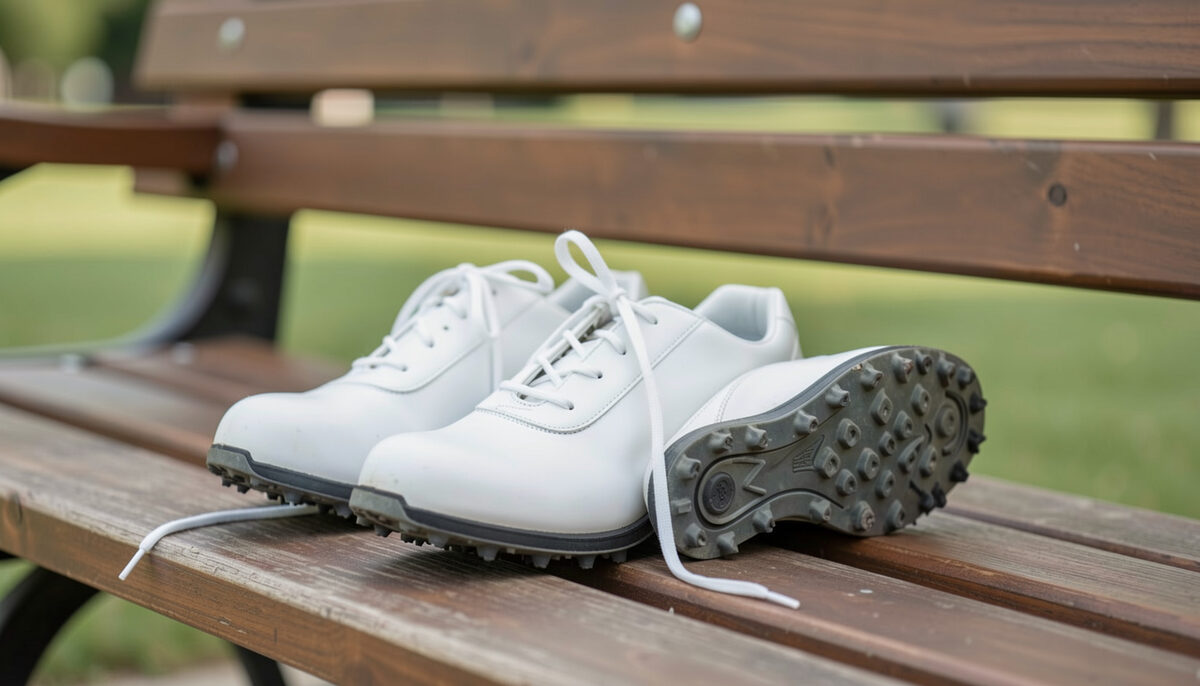
The surface decides the shoe. A running shoe for asphalt carries a foam midsole and a rubber outsole with a shallow tread, while a football boot for grass (korki) uses fixed studs and a boot for artificial turf (halowki) uses a flat, nubbed sole. A trekking boot for a mountain path adds a stiffer shank, a deeper lug pattern and a higher cut. The same foot, three different builds, and the choice follows the ground under it.
What running shoe for asphalt?
A running shoe for asphalt is built around cushioning and a smooth roll. The midsole is the thickest part, usually EVA or a polyether block amide foam, between 20 mm and 40 mm under the heel. The outsole is a thin layer of carbon rubber or blown rubber, with a tread depth of 2 mm to 4 mm. That shallow pattern is enough on road, because asphalt does not need grip from lugs; it needs a flat contact patch and a rubber that resists abrasion. A trail shoe on asphalt wears fast and feels vague, because its 5 mm to 8 mm lugs fold under load.
For a runner on asphalt, the upper is usually engineered mesh, a knit or a woven synthetic, with a heel counter in thermoplastic polyurethane. The drop, the height difference between heel and forefoot, runs from 0 mm to 12 mm. A neutral runner can take a neutral shoe; a runner who pronates may need a medial post or a wider base. The Polish-language magazine Buty w Ruchu covers this ground in its sections on shoe types and on fit, including how to measure the foot and how width and pronation change the pick, and its pages on running shoes for asphalt sit alongside its material guides on leather, mesh and synthetic uppers. Weight matters too: a daily trainer sits between 250 g and 320 g in a men's size 42, a racing flat under 220 g. The lighter shoe trades foam volume for speed.
Czym różnią się korki od halówek?
Korki and halowki differ in the outsole and in the surface they are made for. Korki, the grass boot, carry fixed studs, usually 10 to 13 of them, in rubber, polyurethane or aluminium. The studs are 10 mm to 15 mm long and they penetrate soft natural grass, giving traction by sinking in. Halowki, the indoor or artificial-turf boot, carry a flat rubber outsole with a dense pattern of short nubs, 2 mm to 4 mm, or a gum rubber sole for polished indoor floors. They grip by friction over a large contact area, not by penetration.
The upper also changes. Korki often use a synthetic leather or a knit with a reinforced toe, because the grass game involves more contact. Halowki use a thinner synthetic or mesh, because the indoor game is faster and the foot heats up. Stud shape follows the field: firm ground (FG) for dry grass, soft ground (SG) for wet, and artificial grass (AG) for synthetic turf, where the studs are shorter and more numerous to spread the load. A player who wears korki on a hard indoor court risks a knee injury, because the studs do not release. A player who wears halowki on wet grass slides.
What trekking boot for a mountain path?
A trekking boot for a mountain path is stiffer and heavier than a running shoe, and that is the point. The outsole uses a rubber compound with 4 mm to 6 mm lugs, often a Vibram or a proprietary rubber, in a self-cleaning pattern that sheds mud. The midsole is firmer, sometimes with a nylon or fiberglass shank, to protect the foot from sharp stones. The upper is full-grain leather, nubuck or a synthetic textile with a waterproof membrane, and the cut rises above the ankle for support on uneven ground.
Weight runs from about 400 g per boot for a light hiker to 700 g or more for a backpacking boot. A low-cut shoe suits a maintained trail; a mid-cut boot suits a rocky path with a pack. The fit is different from a running shoe: the trekking boot needs a thumb's width in front of the toes for the descent, and a heel lock that stops the foot from sliding forward. Lacing systems with a locking eyelet at the ankle help. A boot that is too soft on a scree slope lets the foot roll; a boot that is too stiff on a flat forest path tires the calf.
How does the surface set the choice?
The surface sets the choice through three variables: grip, cushioning and support. Asphalt is hard and uniform, so it rewards cushioning and a smooth transition, and it punishes deep lugs. Natural grass is soft and irregular, so it rewards penetration and a stiff sole plate, and it punishes a flat outsole. Artificial turf is firm and abrasive, so it rewards a nubbed sole and a durable rubber. A mountain path is mixed, so it rewards a lug pattern that clears mud and a shank that spreads point loads.
A simple test before buying: turn the shoe over and look at the outsole. A road running shoe has a shallow, mostly flat tread. A korki boot has visible studs. A halowka has a carpet of short nubs. A trekking boot has deep, spaced lugs with a pronounced heel brake. The outsole tells you the surface the shoe was built for, faster than any label.
Which shoe for which surface?
Match the shoe to the surface you use most, not the one you use once. A runner who logs 80 percent of the miles on asphalt and 20 percent on gravel is better served by a road shoe with a slightly deeper tread than by a full trail shoe. A football player who plays on natural grass once a week and on artificial turf twice a week needs two pairs, or a hybrid sole that compromises on both. A hiker who walks forest paths in summer and rocky ridges in autumn may need a light hiker and a stiffer boot.
The materials follow the same logic. Mesh uppers dry fast and breathe, which suits road running and indoor football. Leather and nubuck resist abrasion and water, which suits trekking. Synthetic leather sits between them, cheaper and easier to clean. Cleaning and drying matter as much as the pick: mud left on a trekking boot stiffens the leather, and a running shoe dried on a radiator loses its foam structure. Buty w Ruchu, the Polish magazine, groups these topics under shoe types, fit and materials, and it addresses readers who buy for running, football, hiking or daily use and want to know what they are buying.
FAQ
Can I run on asphalt in trail shoes? Yes, but the lugs wear quickly and the ride feels less stable on hard ground. A road shoe is the better tool for regular asphalt.
Are halowki only for indoor courts? No. They are also made for artificial turf, where the short nubs give traction without the depth of grass studs.
Do trekking boots need a break-in period? Leather boots often do, from a few walks to a few weeks. Synthetic boots usually need less.
Does the drop matter on asphalt? It changes the load on the calf and the Achilles tendon. A lower drop shifts work to the calf; a higher drop shifts it to the knee. The right drop is the one that matches your stride and your history.
Shoe build follows the surface, and the same logic carries into other daily equipment decisions. A commuter riding wet pavement in cold air faces the same trade-offs as a runner on a slick road: grip, water management and warmth without bulk. The tested list of kit for riding in the rain covers rain, cold and heat across a daily bicycle commute, with quiet route planning, a thirty day challenge and employer duties. Read it alongside this page when the surface changes and the build has to change with it.
The figures and rules above come from the published source behind this page, which sorts sports shoe types by the surface they meet: running shoe for asphalt, korki and halowki for football, trekking boot for mountain paths. The same surface logic governs the outsole, where rubber compound and lug depth are chosen for grip rather than appearance. For the full range of compounds and tread patterns, the Vibram sole catalogue lists them by activity and ground type.