Material · Knit
Knit: mid layers and head covers, one craft
A mid layer for the cold half of the season, and the covers that ride the bag all year.
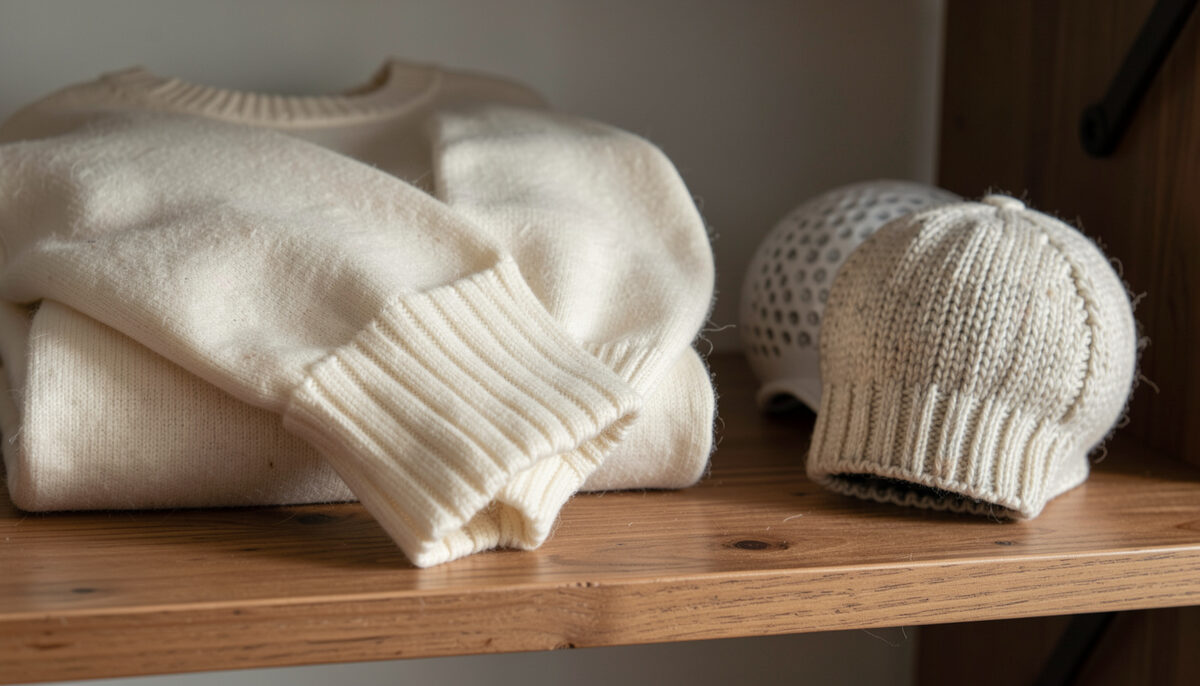
Knitting in golf equipment serves two distinct jobs: keeping the golfer warm and keeping the clubs quiet. A merino mid layer and a knitted head cover share a craft, looped yarn forming interlocking stitches, but they diverge in fibre, weight, and the kind of wear they absorb. Understanding both helps you choose pieces that last beyond a single season and perform through a full round.
The fibre question: merino, lambswool and the alternatives
Merino dominates golf knits for good reason. The fibres are fine, typically between seventeen and nineteen microns in diameter, which eliminates the itch associated with traditional wool. The natural crimp of merino traps air, providing insulation without bulk, and the fibre manages moisture across a wide temperature range. A merino mid layer worn over a polo on a cold morning will still feel comfortable when the sun breaks through at noon, because the fibre absorbs and releases vapour without the clamminess that synthetic fleece can produce.
Lambswool, shorn from the first shearing of a lamb, sits one step below merino in softness but holds its own in warmth and durability. It is often less expensive and appears in mid layers where a slightly coarser hand is acceptable, outer knits worn over a shirt rather than against the skin. Cashmere turns up in luxury golf knits, prized for its softness and warmth-to-weight ratio, but it pills more readily and wears thin under the friction of a bag strap. It belongs in the clubhouse more than on the course.
Cotton knits appear in lighter golf layers, usually for spring and autumn rounds where overheating is the greater risk. Cotton lacks the recovery of wool and provides less insulation per gram, making it a heavier choice for the same warmth. It works in a fine-gauge cardigan or a light vest but falls short as a serious mid layer in cold or wet conditions.
Knit structure and what it means on the course
The stitch type, the yarn thickness, and the density of the knit all shape how a garment behaves. A jersey knit, the simplest construction, with every row of stitches facing the same direction, is lightweight and drapes well but curls at the edges. It works for a base layer or a thin pullover but lacks the structure needed for outerwear. A rib knit, which alternates columns of knit and purl stitches, offers more stretch and recovery. Ribbed cuffs and hems grip the wrist and waist without binding, which matters when a golfer reaches through a full swing.
Cable knits, with their twisted stitch patterns, trap more air and provide more warmth per layer. They are heavier and bulkier, which limits their usefulness under a wind shell or rain jacket. A cable knit vest worn over a polo on a dry, cold day is a practical combination; the same vest under a waterproof shell compresses the cables and reduces their insulating value. Interlock knits, a type of double knit, are denser and smoother than jersey. They resist curling and offer a stable face that takes embroidery well, which is why many club-logo mid layers use interlock construction.
Gauge, the number of stitches per inch, controls thickness. A twelve-gauge knit is fine and light, suitable for a layering piece that slips under a jacket. A five-gauge knit is thick and heavy, closer to outerwear than a mid layer. Most golf mid layers sit between seven and ten gauge, balancing warmth against the freedom of movement a swing demands.
The swing test: stretch and recovery in a knitted layer
A golf knit must accommodate the shoulders rotating, the lead arm extending, and the torso turning through a wide arc. A mid layer that is too tight across the upper back restricts the backswing. One that is too loose bunches under a shell and adds bulk without warmth. The cut matters as much as the fibre: raglan sleeves, or set-in sleeves with a modified shoulder seam, allow more freedom than a standard dropped shoulder. Some mid layers add a gusset under the arm to improve range of motion without adding fabric elsewhere.
Elastane blended into the yarn, typically two to five per cent, gives a knit more recovery, meaning it snaps back after being stretched through the backswing rather than sagging by the back nine. A merino-elastane blend mid layer will hold its shape through eighteen holes in a way that pure wool cannot. The trade-off is that elastane reduces breathability slightly and makes the garment less tolerant of high heat in washing. Check the care label before buying: a mid layer that requires hand washing may not survive regular use on a busy schedule.
Head covers: the same craft, a different job
Knitted head covers have been standard for drivers and fairway woods for decades, and the reason is straightforward. The stretch of a knit allows a cover to slide on and grip the clubhead without a fastener. A rigid cover can rattle or slip off; a knitted one hugs the head and stays put. The cushioning effect of the yarn between shafts in the bag prevents the metal-on-metal damage that hard plastic covers sometimes allow.
Most knitted head covers use acrylic yarn, which is durable, colourfast, and easy to wash. Wool appears in premium sets, chosen for its natural moisture resistance and its texture, which feels more substantial in the hand. The rib stitch dominates cover construction because it contracts to grip the clubhead. The opening end is usually finished with a tighter rib or a band of elastic to prevent the cover riding up during transport. A pompom or tassel at the closed end is partly decorative but also serves as a visual marker, helping you identify your club in a bag of fourteen. The choices behind that grip, fibre, weight and gauge, are followed in the covers entry on this rail.
Embroidered numbers and logos are applied after knitting, usually on a flat panel of stockinette stitch where the embroidery sits cleanly. When a cover begins to pill, lose elasticity at the opening, or thin at the crown, it is time to replace it. A loose cover slides off during transport and leaves the clubhead exposed to scratches and dents.
Care and longevity of knitted golf gear
A wool mid layer, cared for properly, lasts several seasons. Wash it inside out in cool water with a wool-specific detergent. Never use fabric softener, which coats the fibres and reduces their moisture-management properties. Dry flat rather than hanging, because the weight of wet wool stretches the shoulders. Store folded, not on a hanger, for the same reason.
Pills form on any knit that experiences friction, under the arms, along the side where a bag strap rubs, at the waistband. A fabric comb or sweater stone removes them without damaging the yarn. For storage between seasons, clean knits before putting them away. Moths target body oils and food residue rather than the fibre itself, so a freshly washed sweater is less attractive. Cedar blocks or lavender sachets in the storage drawer provide natural deterrence without the chemical smell of mothballs.
Head covers are less demanding. Most acrylic covers tolerate a machine wash, though turning them inside out protects the outer face. Wool covers should be hand washed or dry cleaned. When a cover loses its grip at the opening, no amount of washing restores the elasticity, the elastane or the rib structure has broken down, and the cover needs replacing.
Wool mid layers and knitted covers answer two different problems: a fibre traps heat against the body, while a knit headcover absorbs contact between club and club. Neither task involves a handler, a dog or a flock, yet the same question of preparation runs through both. A golfer packing for a cold round decides what to carry and what to leave; a handler at the post decides much the same, and what a first trial asks of handler, dog and sheep is set out plainly in that guide, phase by phase, from outrun and lift to shed and pen.