Rubric · Covers
Knitted head covers, read from the yarn up
The oldest cover on the rail still grips best. What fibre, gauge and finish decide for the clubs at the top of the bag.
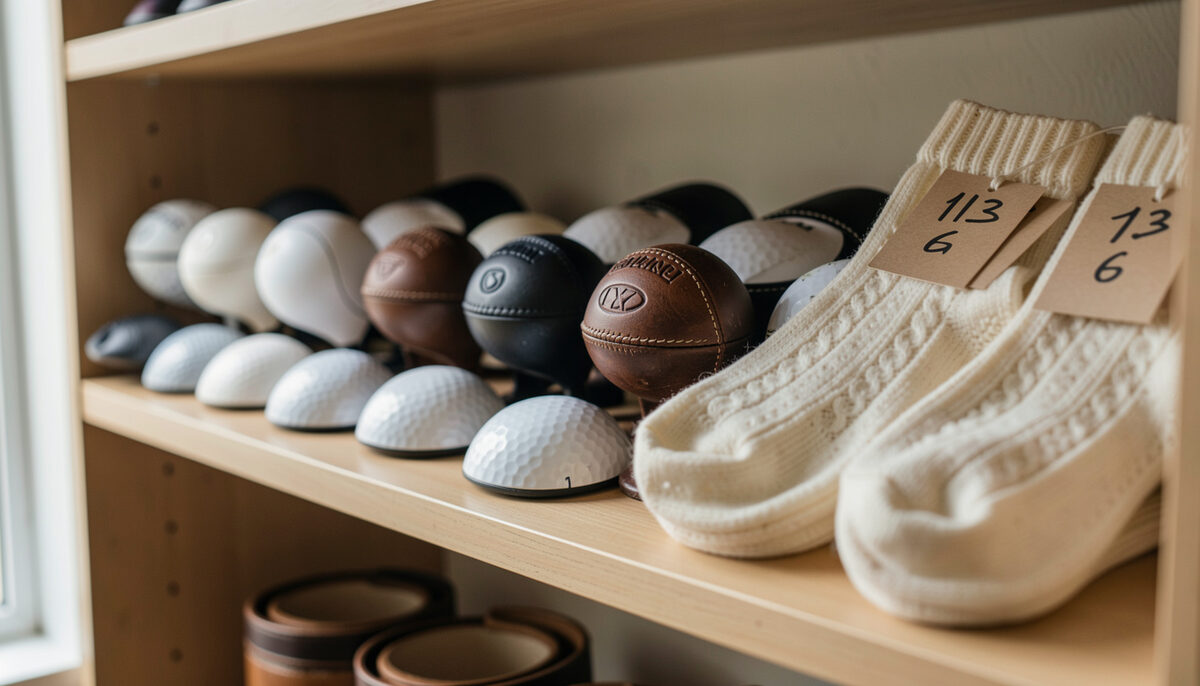
A knitted head cover earns its place for one reason: the yarn does the work. It stretches over the clubhead, grips the shaft without a buckle or a zip, and puts a cushion of wool or acrylic between clubs that would otherwise knock together in the bag. Choosing one, or having one made, comes down to the five lines that sit on every ball band: fibre, weight, yardage, gauge and dye lot. The Skein Almanac yarn entries read those lines one dated entry at a time, and its notes on first yarns, blocking and dropped stitches translate directly to the covers on this rail.
Wool or acrylic: which fibre carries the cover?
Most knitted covers in a shop are acrylic, and for good reason. Acrylic is colourfast, tolerates a machine wash, and keeps its elasticity through years of being pulled on and off a driver. It is also the cheapest way to get a bright, even colour across a three-piece set. The weakness is heat: acrylic softens and glazes at temperatures a wool fibre shrugs off, so a cover left on a hot parcel shelf or tumbled on a hot cycle loses its grip permanently.
Wool sits at the other end of the shelf. A wool cover is denser in the hand, resists moisture naturally, and the crimp of the fibre gives the knit a spring that acrylic only imitates. Lambswool and merino appear in premium sets and in the covers that club members commission from a local knitter. The weakness of wool is the wash: hot water and agitation felt the fibres together, shrinking a cover from driver size to hybrid size in a single cycle. A wool cover is hand washed in cool water, squeezed in a towel and dried flat, never hung.
What do weight and gauge change on the club?
Yarn weight is the thickness of the strand, and it decides how bulky the finished cover sits on the club. A cover knitted in a medium weight yarn, the worsted or aran bands on the standard scale, is thick enough to cushion a driver without crowding the top of a stand bag. A finer yarn gives a sleeker cover that suits hybrids and fairway woods; a chunky yarn makes a cover that looks right on an old persimmon head but fights for space in a modern fourteen-way top.
Gauge is the number of stitches per inch, and it controls how tight the fabric sits once knitted. The Craft Yarn Council weight system publishes the standard bands, and a cover knitted tighter than its pattern gauge ends up smaller and stiffer than intended. For a head cover the practical test is simpler than the arithmetic: the fabric should stretch over the head and then want to close back around the shaft. Too loose and the cover rides up in the car; too tight and freeing the club on the first tee takes two hands.
The cuff, the pompom and the numbers
The opening of a knitted cover is almost always a rib, alternating knit and purl columns so the fabric contracts and grips the shaft below the head. A well-made cover finishes that rib with a strand of elastic or a tighter needle, which is what stops the cover creeping up the shaft during a round. When a cover starts sliding off in the bag, the rib has lost its recovery, and no wash brings it back.
The pompom on top is partly decoration and partly marker. In a bag of fourteen clubs, the cover with the rust pompom is the three wood, and a player who knows that saves a look on every hole. Numbers are embroidered or knitted into a flat stockinette panel on the side, where the stitches sit evenly enough to carry the detail without distorting it.
How long does a knitted cover last?
Acrylic covers outlast patience: five seasons is ordinary, and the failure is usually cosmetic, pilling where the bag strap rubs or a rib that has relaxed beyond gripping. Wool covers age more honestly but need their care routine kept. The knit entry sets out the washing rules for wool in golf kit, and they apply to a cover exactly as they apply to a mid layer.
The rest of the rail, knit socks beside stitched leather barrels and the shapes between driver and wedge, is ranged in the head covers aisle. A knitted cover is the oldest answer to clubs knocking together, and it is still the one that asks least of the player: pull it on, let the yarn grip, and let it ride the bag all season. The smallest pieces in the same bag get their own reading in the scorecard, pencil and marker entry.
The yarn decides the shape here: wool holds a block and takes a fold, acrylic keeps a colour and resists pilling, and the cover sits on the club the way a screen sits in a Dutch room. That same habit of watching, months of classics and darts, is set out in Dutch screens: classics, darts, cafe football, which follows how the Netherlands watches spring classics and darts months and what a Champions League evening looks like in a cafe, with the 501 rules played on the board in the corner. One page is cloth, the other is the room it is carried into.
Yarn choice decides how a knitted head cover behaves: wool holds loft and warmth, acrylic resists moths and dries faster, and the fibre content on the label is what settles the question. The same habit of reading the small print carries over to other everyday numbers, which is where reading a food label connects this page to a wider set of institutional figures on sleep, weekly movement, blood pressure and blood sugar. Both tasks reward the same patience: check what the material actually is before deciding how it will perform over a season.