Material · Mesh
Mesh: the ventilation panel, read by weave
The same open weave in three places: a shoe upper, the back of a cap, the panel under a sleeve.
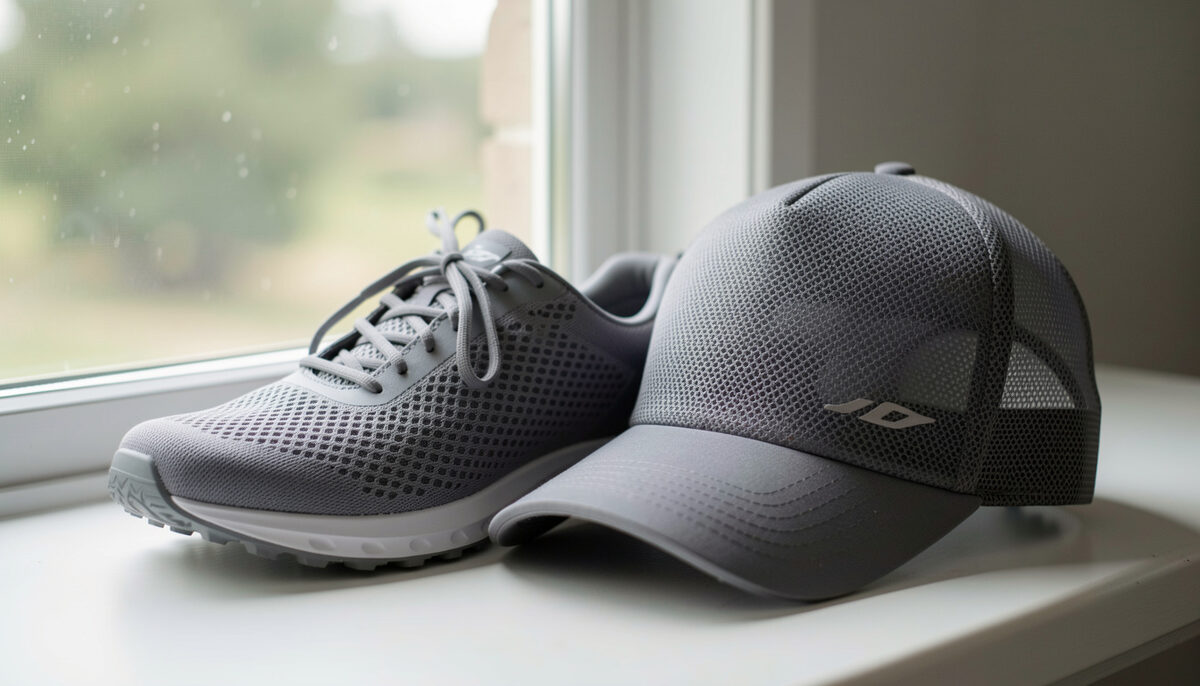
Mesh is the quiet material of modern golf gear. It does not carry the heritage of leather or the technical mystique of a waterproof membrane. What it does is let air through. In a sport where a round lasts four hours in variable heat, ventilation is not a luxury, it is the difference between a shoe that blisters and one that breathes, a cap that soaks through and one that vents, a polo that clings and one that moves.
Shoe uppers: where mesh earns its keep
The modern golf shoe upper is a combination of materials, and mesh is the ventilation panel. A typical spikeless shoe uses a synthetic leather or microfiber toe cap for structure, with mesh panels along the sides and across the vamp where airflow matters most. The position is chosen so that the foot's natural flex zone aligns with the most open part of the weave.
Shoe mesh for golf is usually a warp-knit polyester, chosen because polyester does not absorb water the way nylon does. A nylon mesh panel will hold moisture and sag when wet, which changes the fit of the shoe mid-round. Polyester mesh sheds water faster and holds its shape regardless of humidity. The weight of the mesh also matters: lighter mesh, around one hundred grams per square metre, breathes better but offers less lateral support during the swing. Heavier mesh, up to two hundred grams per square metre, braces the foot more effectively but runs warmer. Manufacturers pick a weight based on the shoe's intended use, a competition shoe trends lighter, an all-day walking shoe trends heavier.
The weakness of mesh in a shoe upper is abrasion. Mesh does not resist scuffing the way leather or synthetic leather does, and a golfer who drags the toe of the trailing foot during the swing will wear through a mesh toe panel within a season. This is why the toe cap is almost always a solid material, with mesh set back from the highest-wear zone. If you are examining a shoe and the mesh runs all the way to the toe edge, expect that panel to show wear sooner than the rest of the upper. The broader comparison of construction types is covered across the shoes aisle.
Cap backs: the ventilation panel overhead
Golf caps use mesh in a single, predictable location: the rear panels. The front panels, the ones that carry the logo and shape the crown, are made from a structured fabric, usually twill or a polyester blend. The back two or three panels switch to mesh, creating a chimney effect where warm air rises through the crown and exits through the open weave.
The mesh in a cap back is typically a tricot knit, lighter than shoe mesh and with a finer gauge. The holes in the weave are small enough to block most direct sunlight while still allowing convection. A snapback or strapback cap uses this mesh as a structural element too, the rear panels are not lined, so the mesh must hold its own shape when the cap is adjusted. A fitted cap may use a slightly heavier mesh with a mesh-backed foam front panel, which gives a taller crown without adding heat.
Mesh in a cap has one failure mode: sweat staining. The headband absorbs perspiration, but the mesh panels above it can still accumulate salt deposits, which show as white marks on dark mesh. These marks are removable with a gentle hand wash, but the mesh should never be machine-washed. The agitation distorts the knit structure, and a cap with stretched mesh panels loses its crown shape permanently. For a wider view of cap construction beyond the mesh panels, the hats aisle covers crowns, brims and fits.
Polo panels: mesh under the sleeve
The third and most hidden use of mesh in golf clothing is the underarm and side-body panel on a performance polo. These panels sit where heat and moisture concentrate, under the arm and along the torso, and the open weave allows both to escape faster than the solid knit of the main body fabric. On a hot day, the difference between a polo with mesh side panels and one without is noticeable within the first few holes.
Polo mesh is almost always a fine-gauge polyester knit, often with a slight mechanical stretch from the knit structure rather than from elastane. This choice is deliberate: elastane in mesh reduces the openness of the weave because the recovery yarn pulls the holes closed. A mesh panel that is supposed to ventilate but has been tightened by elastane moves air less effectively. Manufacturers who want stretch in a mesh panel use a specific knit construction, usually a double-knit mesh, that provides both openness and recovery without relying on elastane.
The seam where the mesh panel meets the main body fabric is a potential weak point. Because the two fabrics have different stretch and recovery rates, the seam can pucker after repeated washing. A flatlock seam reduces this problem by joining the two fabrics edge to edge rather than overlapping them, which also eliminates the ridge that a conventional seam leaves against the skin.
How open is too open
Every mesh application in golf gear involves a trade-off between ventilation and structure. The more open the weave, the better the airflow, but also the less the fabric supports itself. A shoe mesh that is too open will not hold the foot during a lateral weight shift. A cap mesh that is too open will collapse in wind. A polo mesh that is too open will snag on branches and show through to the skin underneath.
The measure is air permeability, expressed in cubic centimetres per square centimetre per second. Golf shoe mesh sits around two hundred to four hundred, cap mesh around one hundred to two hundred, and polo panels around three hundred to five hundred. Numbers outside these ranges usually signal a panel optimised for one property at the expense of the other. The best gear sits in the middle, where the weave moves air and still holds its job.
Ventilation numbers only describe how a shoe, a cap or a polo moves air, and the same reading habit carries over to other gear lists. A mesh upper rated at 300 mm/s tells you about airflow, not about what the wearer will meet. The same is true of a logbook, where entries are graded by depth, current and visibility rather than by brand. Anyone who wants to see how that grading works in open water can spend a few minutes reading a Mediterranean dive site, where La Catedral, the Isla de San Andres and the Piedra de los Meros are logged with the conditions each one asks for.
Ventilation numbers describe how a shoe, cap or polo moves air, not how a body uses it, and the two are measured on different scales. Air permeability is read in cubic feet per minute through a fixed area at a set pressure drop; energy expenditure is read in metabolic equivalents against body mass and time. A reader who wants the second figure, and the training that shifts it, can find it in the note on how long a run must be, which covers short cardio, the 12-5-30 treadmill protocol and strength work after fifty. Mesh decides comfort; the other page decides load.