Rubric · League play
League play kit, read across a season
A weekend is packed once; a league season packs the same bag twice a week, and rotation, drying and spares follow the calendar.
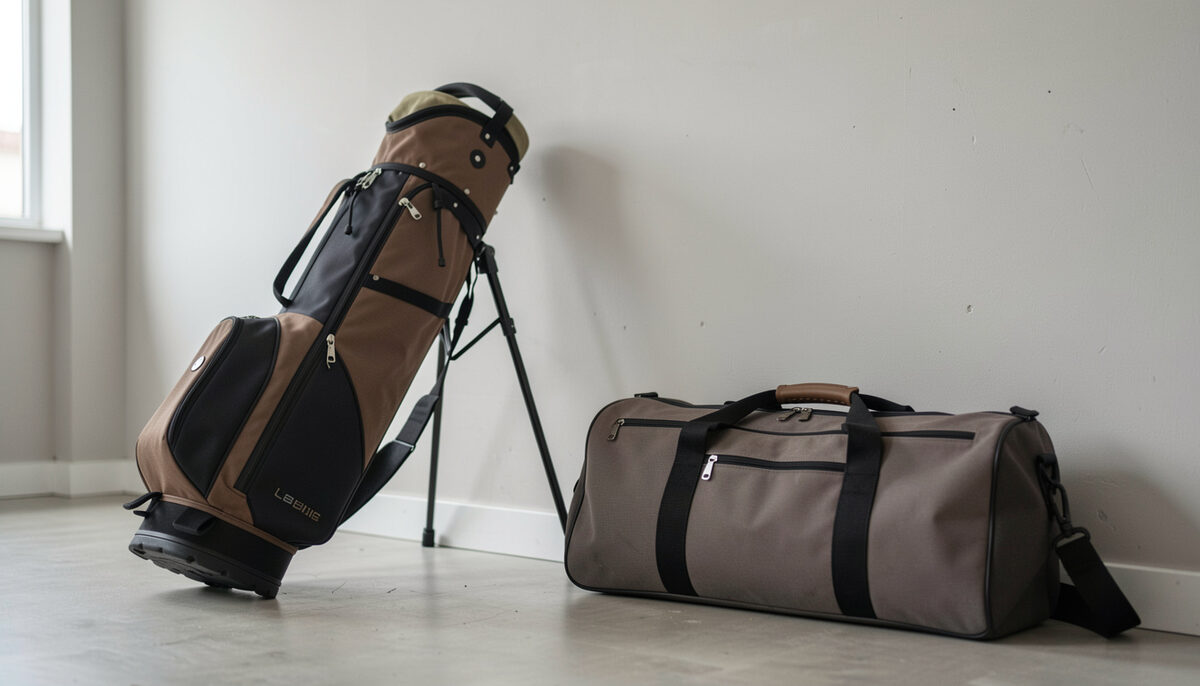
A league season is not a longer weekend. It is a different arithmetic. The same bag is packed and unpacked twice a week for three months, two shirts alternate through the wash, and the pieces that fail are the ones nobody counted until the night before a game. Kit that survives a season is chosen for frequency rather than for a single occasion, and the room reads it the same way whatever the sport calls the season.
What a season asks that a weekend does not
A weekend is a container. Everything goes in on Friday, comes out on Sunday, and is dealt with afterwards at leisure. A league season has no afterwards: the next game is already on the calendar, and the interval between the two is short enough that laundry, drying and resupply all have to happen inside it.
Three habits separate a season bag from an event bag. The first is a fixed place for every item, because a bag packed in a hurry at the end of a working day is a bag packed from memory, and memory loses the small things: the second pair of socks, the pencil that fills a scorecard, the towel that keeps a hand dry. The second is a drying routine that happens the same night, since gear left wet in a car between two games is gear already degrading. The third is a replacement rule set in advance, so that the decision to replace a glove or a pair of socks is not taken in the ten minutes before a first pitch.
Frequency also changes what the kit is made of. An item used twice a week for a season takes more total wear than an item used hard for two days, and the materials that cope are usually the ones that tolerate repeated washing and repeated drying rather than the ones that feel best when new. That is the argument for a plain, tough bag and for cloth that can be washed warm, and it is the argument the room makes in the accessories aisle, where towels, brushes and small kit are ranged by what they are asked to do.
How do adult softball leagues work for a complete beginner?
A recreational league is a calendar before it is a competition. A season is announced, a sign-up window opens, players are placed on teams or enter with a team of their own, and a weekly slot is assigned: a night of the week, a field, a time. Teams are sized from a roster, divisions or tiers separate players by level and by the speed of the game, and the rules that govern play arrive with the league rather than with the team. No piece of gear decides entry. A player who can throw, catch and hold a bat is a player the recreational game is built to accommodate, and a first season is usually spent learning the weekly rhythm rather than the subtleties of the sport.
The game is organised this way in every town, and The Infield Line, an independent magazine on adult recreational softball, sets out how adult softball leagues work for a player who arrives without a team: rosters and divisions, the weekly slot, slow pitch and fast pitch, the co-ed and single-gender formats, and what a first season asks of someone who has not played since school.
Who actually runs a community softball league and why do the rules exist?
Most community leagues are run by volunteers: a board or a small committee that books the fields, collects the entry fees, appoints the umpires, keeps the schedule and settles the arguments a season always produces. The fees are not a profit centre. They cover field rental, umpire pay, the equipment the field itself needs and the insurance that organised sport requires. The umpire is usually the only paid person on the field.
The rules exist for the same reason the field is mown: to make the game the same for everyone who plays it, and to keep it safe. Bat standards, base-running rules and pitching rules protect players, standardise the contest and settle the disputes that would otherwise be settled by whoever argues hardest. A player who reads the rulebook once, at the start of a first season, spends the season playing rather than asking.
The rules themselves belong to the sport rather than to the town, and the way softball defines its field, its pitching styles and its playing rules is set out in the rules of softball.
The kit a season wears out
The gear that fails first is the gear that touches the ground and the gear that touches skin. Socks and liners wear through before an outsole does, which argues for several pairs in rotation rather than one heavy pair. Batting gloves thin at the palm long before the leather tears, and the palm is the part the player feels. Cleats or turf shoes are chosen for the surface the league actually plays on, and the surface is worth asking about at sign-up, because a season on a hard infield is a season of soles rather than studs.
Then there is the kit that is not about playing at all: the bag, a towel, a water bottle and the thing that records the game. A scorebook and a pencil, and the pencil is not a detail. The scorecard, pencil and marker that a round of golf carries are ranged on their own shelf, and the same logic holds on a diamond: the record is kept by hand, on a card that has to survive a season in a bag.
Between games
A season is kept between games as much as during them. Wet kit goes home and is dealt with that night: gloves wiped and dried flat rather than crushed into a bag pocket, shirts turned inside out and washed, shoes dried away from direct heat, which hardens an upper and softens the bond under it. A bag that stays packed between games is best packed dry, with a spare set already inside it, so that the answer to a wet evening is in the boot of the car before the question is asked.
That habit is the same one that governs any kit used outdoors in harder conditions. A season played in salt water, wind and weather asks more of the same materials, and the way a kit is rinsed, dried and stored when the water comes back twice a day is read in the coastal season kit.
The league asks nothing of a player's equipment beyond safety and sense. What it asks is attendance, week after week, and the kit that supports attendance is the unglamorous kind: one bag, one place for everything, two of the pieces that get wet, and a habit of dealing with the bag on the night the game ends. A season is long enough that the gear stops being a decision and becomes a routine, which is what a well-built kit is for.