Rubric · Coastal
Coastal season kit, read from the tide table
On a shallow bay the water leaves twice a day, and the kit that works there is chosen for what it does when the salt stays behind.
A shallow bay does not keep its water. Twice a day it empties and fills, and the depth over the bar outside a harbour goes from enough to not enough in a few hours. Kit used on that water is chosen twice over: once for the state it is in when work starts, and once for the state it is left in when the water goes away and the salt dries on everything that stayed behind.
How do the tides work at Rock Harbor and when can boats leave?
A semidiurnal coast gets two highs and two lows in a little over a day of clock, with roughly six hours and twelve minutes from a high to the next low, and a full cycle back to the same tide a little over twelve hours later. That is why a departure time is rarely the same two days running. The window slides, and a boat that cleared the channel at eight in the morning one week leaves in the early afternoon a week later.
On a shallow coast the tide is only half of the problem, because the water is thin and the channel is narrow. A boat needs depth over the bar to leave, and room and flow to come back; a falling tide closes the window early, a rising tide opens it late, and a steady wind can push water out of the bay and take away an inch the table did not mention. The useful habit is not memorising the table but reading two numbers together: the height of the water and the time left before it turns. The mechanics of that cycle, including the difference a wind makes to a predicted height, are set out in the tide entry on Wikipedia.
The Billingsgate Journal, published on the roxysportfishing.com domain, keeps the harbour end of that arithmetic: the rock harbor tides navigable window that decides when a boat can leave, how the channel fills and empties across a season, and the safety that begins with knowing what the water will be doing by the time the boat comes back.
What can I expect to catch in Cape Cod Bay in each month of the season?
The bay does not fill on a fixed date. Water temperature does the deciding, and temperature follows the weather rather than the calendar, which is why two seasons never run on the same dates. The shape of the season is still readable. The cold months are the quiet ones, and the fishing opens as the shallows warm: striped bass move onto the flats and along the channel edges to feed as the bait arrives, bluefish follow the warm water inshore through the summer, and the bluefin season sits later in the year, further out, held by the bait schools offshore. A cold spring pushes all of it back; a warm one brings it forward.
A month by month reading is therefore a local record rather than a rule, which is why it is kept as a season calendar by the people who fish the bay. The water itself behaves as it does everywhere on this coast, and the basin it fills is described in the Cape Cod Bay entry on Wikipedia, from the hook of the outer Cape to the shallows that make the bay a nursery.
What salt does to a kit
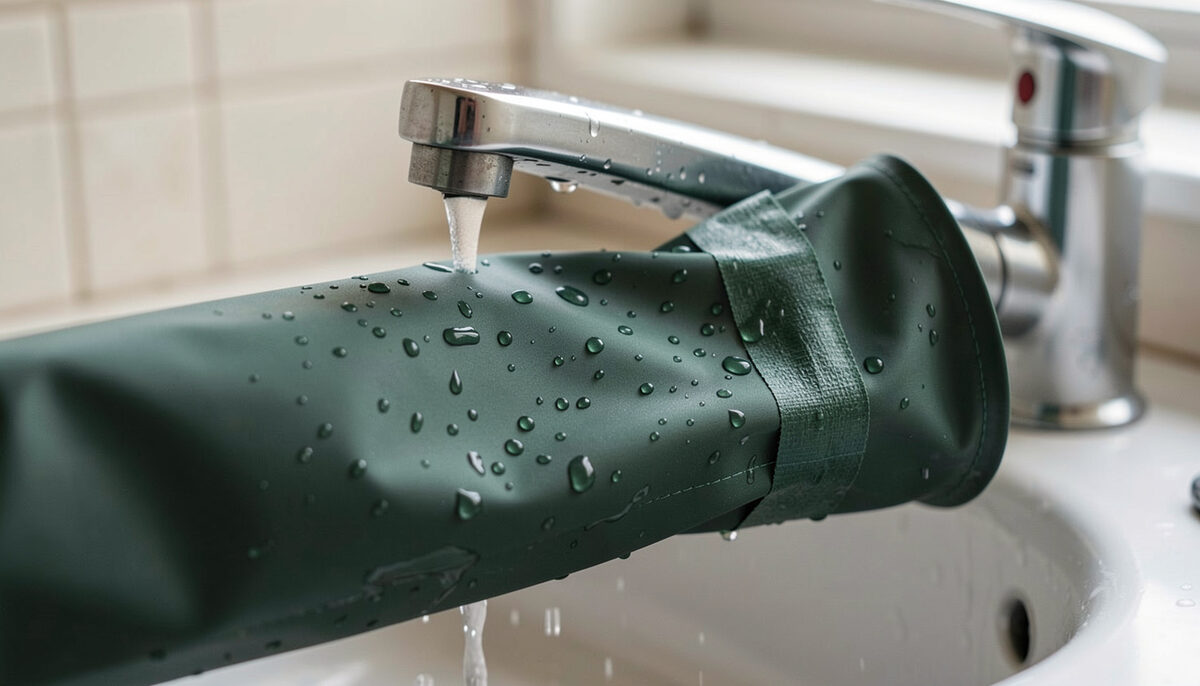
Salt is the part of a coastal season that keeps working after the day is over. It holds moisture against metal, so a hook, a zip, a buckle or a fitting left unrinsed corrodes from the edges inward. It stiffens cloth that dries in the sun, and it leaves a film on anything that was wet when it came out of the water. The answer is dull and it is the same answer the room gives for any membrane: rinse in fresh water, dry in the shade, and never store anything wet inside a closed bag. Rain shells, dry bags and any garment with a water-repellent finish are read the same way in the waterproof entry, where the membrane does the stopping, the seams do the sealing and the finish does the shedding.
The dry list
Reading a season on a shallow bay also means reading it backwards. A departure is planned from the return, because a boat that has to be back on the trailer before the water leaves needs a window that covers the whole day rather than the morning alone. That is why the table is read the night before rather than at the ramp, and why the same two numbers, height and time, are worth writing down beside the kit list. A window that closes at noon is a short day whatever time the alarm went off.
What a coastal season adds to a bag is mostly about keeping water out of places it does not belong. A dry bag for a phone and a paper chart, a second towel because the first is wet by mid-morning, one layer more than the forecast suggests, and a pair of sunglasses that cut glare off flat water rather than merely darkening it; the frames and tints that work in low light are ranged in the sunglasses aisle. Gloves and hands get their own attention, because a wet hand on a wet handle is the same problem in every sport played with a grip, and it is ranged in the grip entry.
The habits of a weekly season carry over almost unchanged. Kit is unpacked and rinsed the day it comes home rather than the day before it is needed, a fixed place holds each small item, and the spare of anything that gets wet lives in the bag permanently. The gear used across a season of weekly games, packed and unpacked in a town, is read in the league play kit, and the two lists overlap more than they differ.
Water that arrives and leaves on a schedule is easier to work with than water that surprises, once the schedule is understood. A tide table, a rinse, a dry bag and a kit unpacked the same night will carry a season; the discipline that keeps a bag working in a town keeps a kit working on a coast where everything it touches is wet twice a day.
The same habit of rinsing, drying and storing gear that gets wet twice a day carries over to other water. A coastal season is measured in weekly sessions on a shallow bay; a river season is measured in hatches and flows. Readers who want the second kind of log will find it in a fly box for the McCloud, which covers month by month hatches, a freestone fly box, short-line nymphing in pocket water, and two or three day logistics out of Dunsmuir on the McCloud and Upper Sacramento.
Rinsing, drying and storing a kit that gets wet twice a day is a routine of small numbers: how many hours between sessions, how much salt stays in the seams, how often a wetsuit is turned inside out. The same habit of counting applies to the body, and hand hygiene and vaccines sets out the figures behind sleep, weekly movement, blood pressure and blood sugar, drawn from institutional sources. Readers who track a tide chart already know the method: measure, repeat, compare. The page extends that method from gear to health.
The same habit of rinsing, drying and storing gear that gets wet twice a day carries over to other sports, and the equipment room keeps a parallel file on racket work. For readers who split the week between the bay and a hard court, clubs and courts in Nimes covers clubs, free courts and covered halls in Nimes and the Gard, the French ranking for amateurs, tournament entry, and racket, string and shoe choices by surface. The two pages share one rule: rinse after every session, dry fully, and store away from salt and damp.
The same rule that governs a coastal kit, rinse, dry, store, applies to footwear, where the surface decides the build rather than the label. A shoe worn twice a day on wet sand and boardwalk dries differently from one kept for pavement, and the construction follows that split. Readers who want the full breakdown of how terrain sets sole, upper and cushioning can read shoes for asphalt and trail, which covers running models for asphalt, studded boots for football and trekking boots for mountain paths.
Weekly sessions on a shallow bay mean the kit is wet twice a day, so the routine is rinse, dry, store, then check the deck lines and the spray skirt before the next launch. That same habit of reading conditions applies on open water, where a capsize is a possibility rather than an accident, and the method used to get back in depends on the sea state, the group and the boat. The four approaches to re-entry after a capsize are set out with the conditions each one needs, which is the useful companion to this page.
A coastal season of weekly water sessions on a shallow bay leaves neoprene, boots and gloves wet twice a day, so the routine is rinse in fresh water, dry in shade and store loose, and the same discipline of watching a schedule holds when the tide and the calendar decide the evening. That habit of following a fixed timetable, and of reading a board or a channel list before the first whistle, is what spring classics on Dutch screens sets out: which channels carry the spring classics and the darts months, what a Champions League evening in a cafe looks like, and how 501 is played on the board in the corner.
A coastal season of weekly water sessions on a shallow bay leaves kit wet twice a day, so the rinse, dry and store routine becomes the quiet centre of the week. The same rhythm of short, repeatable effort shapes the other side of the site, where a page sets out how long a run must be for weight loss, what the 12-5-30 treadmill protocol does to energy expenditure, and strength work for people over fifty. Kit dried by the door, shoes by the mat: both pages treat a session as something planned, logged and repeated.
A coastal season of twice-daily water sessions leaves little room for anything else, but the same discipline of rinsing, drying and storing wet kit applies to other working events. Handlers who follow a dog through a season of trials will recognise the routine. The phases of a sheepdog trial run from outrun and lift to shed and pen, and judges score each one, so a first trial asks steady work of handler, dog and sheep alike. The guide sets out the phases and the classes from Started to Open in plain terms.
A coastal season of weekly sessions on a shallow bay leaves the same residue as any saltwater habit: sand in the seams, salt in the fabric, and a bag that never quite dries between tides. Rinsing after every session, drying flat, and storing by fibre rather than by pile keeps a kit serviceable across a whole season. The same water that makes the bay work twice a day also shapes the open coast, and readers who want the mechanics of board control, pop-up timing, and reef breaks can find them in surfing the south coast, which covers sandbanks, rock bottoms, and rip currents.
The rinsing and drying routine that keeps a wetsuit, booties and a hood serviceable across a coastal season applies to any garment worn in weather. A rider who commutes daily faces the same cycle twice a day, and the same questions of fabric, seam and storage. The tested list at kit for riding in the rain covers rain, cold and heat, quiet route planning, a thirty day challenge and what an employer must provide. Readers who pack a weekly session bag will recognise the method: name the conditions, then choose the kit.
The bay sets the rhythm: two water sessions a day, so the kit is rinsed in fresh water, hung in shade and checked at the seams before it goes back in the bag. That same routine travels. A logbook of the dive sites of Cabo de Gata records entries at La Catedral, the Isla de San Andres, the Piedra de los Meros and the flat water of the marine reserve, and each entry turns on the same questions of depth, exposure and drying time. Read the two pages together: one is the weekly habit, the other is where the habit goes.
Rinsing, drying and storing a kit that gets wet twice a day is the routine this page describes, and the same discipline of checking gear before a run applies to other wind craft on the same coast. A pilot preparing a class 8 kite buggy follows a comparable order: the FISLY specification fixes what the class allows, the wing is started and relaunched, crossing and overtaking rules change on a marked course, and a set of pre-session checks is run before the first run. The two pages sit side by side for readers who work a shallow bay through a full season.