Material · Grip
Grip: what a glove palm and a club grip share
Two surfaces, one job. What a damp hand actually holds, from glove palm to rubber cap.
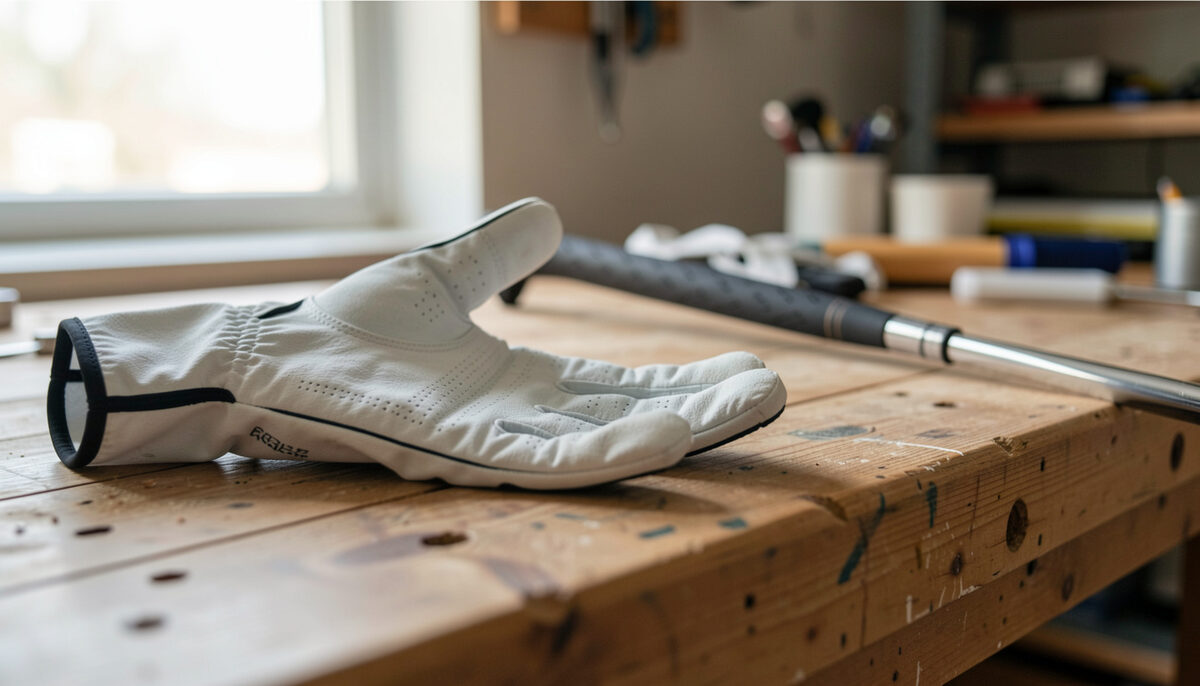
Grip is the point of contact between the golfer and the club, and it is the most variable interface in the game. The same swing, on the same day, can feel entirely different depending on whether the hands are dry or damp, the glove is fresh or worn, and the grip rubber is tacky or polished smooth. Understanding the materials on both sides of that interface, the palm of the glove and the surface of the grip, explains why grip fails and what replaces it when it does.
The glove palm: leather and synthetic surfaces
A golf glove exists to increase friction between the hand and the grip. Bare skin on rubber is surprisingly slippery, especially when damp, and the glove's palm material is chosen to provide consistent friction across a range of moisture conditions. Cabretta leather has been the standard palm material for decades because its fine grain creates a surface that grips well when dry and degrades gracefully when wet, a damp cabretta palm still holds, though with noticeably less bite than a dry one.
Synthetic palm materials have improved considerably. Modern synthetic gloves use a microfiber palm with a raised texture, often a dot or honeycomb pattern embossed into the surface. The texture increases contact area, compensating for the lower inherent friction of synthetic fibres compared to leather. A synthetic palm also absorbs less moisture than cabretta, so the glove maintains more consistent grip in rain or heavy humidity. The trade-off is feel: a synthetic palm is slightly thicker and transmits less tactile information from the grip to the fingers.
Palm wear follows a predictable pattern. The pad at the base of the fingers, where the grip sits in the fingers rather than the palm, wears first, thinning from the repeated rotation of the club during the swing. A golfer with a strong grip, where the hands are rotated clockwise for a right-handed player, concentrates wear on the heel of the palm instead. Most gloves are designed with reinforced panels in these high-wear zones, but the reinforcement adds thickness and reduces feel. Choosing between a reinforced palm and a single-layer palm is a decision between durability and sensitivity, and most better players choose sensitivity, accepting that the glove will need replacing more often. The full glove range, including palm construction differences by brand, is detailed in the gloves aisle.
The club grip: rubber compounds and cord
The grip on the club shaft is the other half of the equation. Most standard grips are moulded from a styrene-butadiene rubber compound, chosen for its balance of tackiness and durability. A fresh rubber grip feels slightly sticky to the touch, that tackiness is what keeps the club from rotating in the hands during the swing. Over time, the oils from the hands, combined with dirt and UV exposure, polish the rubber surface smooth and reduce the tackiness to almost nothing.
Cord grips embed cotton or synthetic fibres into the rubber surface to increase friction mechanically rather than chemically. The cord creates a rough texture that holds even when wet, making cord grips the choice of players who play in rain or humid conditions. The downside is that cord grips are harder on glove leather, the rough surface abrades the palm faster, and a golfer who uses cord grips will go through gloves at roughly twice the rate of one using smooth rubber.
Grip diameter also affects the interface. A grip that is too thin forces the fingers to close further, increasing hand action and risking hooks. A grip that is too thick limits hand action and tends to produce fades. Most players use a standard diameter with or without additional tape wraps, though the trend toward midsize grips has grown as players look for more stability. A larger surface area can also compensate for a grip whose tackiness has diminished.
How the two surfaces interact
The glove and the grip work as a system, and replacing one without considering the other often changes feel more than expected. A new glove on a worn grip feels secure at the palm but slips at the fingers, because the worn grip surface has less friction than the fresh leather. A worn glove on a new grip feels tacky at the fingers but loose at the palm, because the thinned leather has lost its bite. The best feel comes from both surfaces being in good condition, which is why experienced players replace gloves and grips on a schedule rather than waiting for failure.
The schedule depends on frequency and conditions. A golfer playing twice a week in dry weather might replace a glove every six to eight rounds and regrip clubs once a year. In humid or rainy conditions, the same player replaces a glove every three to four rounds and regrips every six months. Cord grips extend the grip side but shorten the glove side, shifting the overall cost rather than increasing it.
Alternatives and accessories
Beyond the glove and the grip, a few accessories modify the interface. Grip sprays, usually a rosin or tackifier solution, restore friction to a grip that is beginning to polish, useful as a mid-round fix. Damp towels clipped to the bag let a player wipe the grip between shots, removing the oils and dirt that accelerate polish. For the glove side, some players dust a drying agent into the palm to absorb moisture in hot conditions.
None of these accessories replace fresh materials. They extend the useful life of a grip or a glove by a few rounds, which is valuable during a tournament or a holiday golf trip where resupply is not easy. For the full range of grip-related accessories, including towels, sprays and grip tape, check the accessories aisle.
The interface is tested harder where a hand is wet for most of the day, and the rinsing and drying that keep a grip usable across a month of salt water are read in the coastal season kit.
The grip interface is the one place in golf equipment where two consumable materials meet. Both wear, both need replacing, and the feel of the game depends on both being in working order. The golfer who manages this interface, replacing gloves before they thin and grips before they polish, plays with more consistent hands than one who waits for the material to fail.
The same logic that governs a glove palm applies to the outsole: the material is chosen for the surface it meets, and wear follows the point of contact. A rubber compound tuned for wet turf behaves differently on asphalt, just as a leather palm behaves differently on a cord grip. Readers who want the fuller picture, from running shoe to korki, halowki and trekking boot, can find it in the argument that the surface decides the shoe, where build, tread and compound are traced back to the ground underfoot.
A glove palm and a grip rubber meet at the same point of contact, and both wear by abrasion, the glove thinning where the club sits, the grip polishing where the hands turn. The same logic of contact and wear runs through nymphing the Upper Sacramento, where a fly box is built around two rivers, the McCloud and the Upper Sacramento, with month by month hatches, short-line nymphing in pocket water and two or three day logistics out of Dunsmuir. Different equipment, same question of what touches what, and how it holds up.