Material · Waterproof
Waterproof: membrane, seam and the number on the label
A membrane stops water, taped seams stop the joints leaking, and only one of the two is printed as a number.
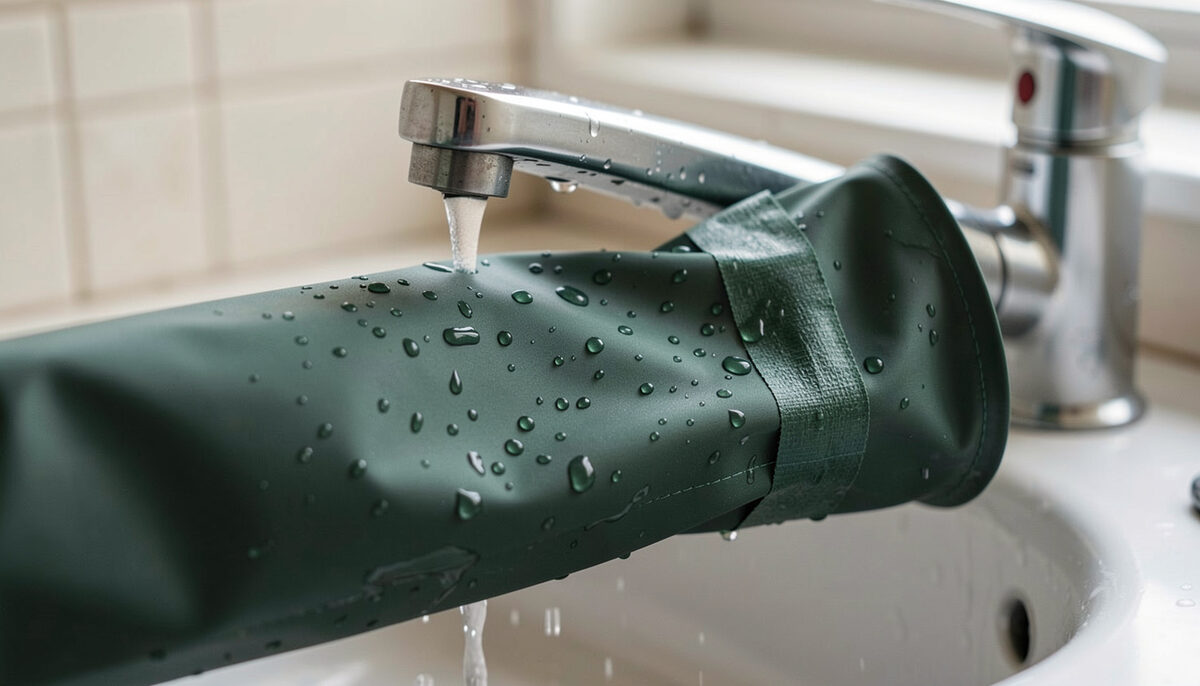
Waterproof is the most overstated claim on a golf label. The word suggests a binary, either the garment keeps water out or it does not, but the reality is a spectrum of membranes, seam constructions and hydrostatic ratings that determine how long the protection lasts under the conditions a golfer faces. A jacket that holds for twenty minutes in a shower is technically waterproof by some standards. The question is whether it holds for four hours in driving rain on a coastal links.
The membrane: what actually stops the water
Every waterproof golf garment uses a membrane, a thin film laminated to the inside of the outer fabric. The most common membrane material is expanded polytetrafluoroethylene, known commercially as ePTFE, though polyurethane membranes are increasingly used in mid-price garments because they are cheaper to produce and easier to recycle. The membrane works by having pores small enough to block liquid water but large enough to allow water vapour to pass through. A single square centimetre of ePTFE membrane contains roughly nine billion pores, each around two hundred nanometres across, large enough for a water molecule in vapour form, far too small for a liquid droplet.
The membrane alone does not make a garment waterproof. It must be protected from contamination. Body oils, sunscreen and course dirt clog the pores, reducing breathability and eventually compromising water resistance. This is why waterproof garments have a face fabric on the outside, usually a tightly woven polyester with a durable water-repellent finish, known as DWR, that sheds the bulk of the water before it reaches the membrane. When the DWR wears off, the face fabric wets out and the garment feels clammy even though water is still being blocked.
DWR is a coating, not a permanent property. It degrades with washing, abrasion and time. Most golf rain jackets need a DWR refresh after twenty to thirty washes, which can be done with a spray-on or wash-in product followed by tumble drying on low heat to reactivate the finish. A jacket whose DWR has failed is still waterproof at the membrane level, but it will feel wet and heavy because the outer fabric is saturated.
Seams: where the membrane meets its limits
A membrane is only as effective as the seams that join its panels. Every stitch through a waterproof garment creates a needle hole, and every needle hole is a potential leak point. The solution is seam tape, a thin strip of waterproof adhesive applied to the inside of every stitched seam, sealing the needle holes.
Fully taped seams mean every seam in the garment has been taped. Critically taped seams mean only the seams in high-exposure areas, shoulders, hood, front zipper, have been sealed, while lower-body seams may be left untreated. The distinction matters in golf because a rain jacket's lower back and hem sit close to the bag when it is carried, and water pooling at the waistband will find any untaped seam. A fully taped jacket is heavier and more expensive, but it is the only construction that holds up in sustained rain.
The zipper is another seam. Standard coil zippers are not waterproof, so a waterproof garment either uses a waterproof zipper, a sealed zipper with a polyurethane coating over the teeth, or hides the standard zipper behind a storm flap. A waterproof zipper is smoother and lighter but costs more to manufacture and can delaminate after several seasons. A storm flap is simpler and more durable but adds bulk and weight. For golf, where the jacket is worn during a swing, the lower profile of a waterproof zipper is often preferred despite the cost. The full range of jacket styles and layering options is laid out across the outerwear aisle.
Ratings: reading the number on the label
Waterproof ratings are expressed as a hydrostatic head in millimetres. The test places a column of water on a fabric sample and measures how tall the column must be before water pushes through. A rating of ten thousand millimetres means the fabric resisted a ten-metre column of water. Most golf rain jackets are rated between ten thousand and twenty thousand millimetres. A jacket rated below ten thousand is water-resistant rather than waterproof and will wet through in prolonged rain.
The breathability rating is expressed as moisture vapour transmission rate, measured in grams per square metre per twenty-four hours. A jacket with a rating of ten thousand grams breathes well enough for moderate activity. Golf involves bursts of exertion followed by standing still, and a breathability rating below eight thousand will leave most players feeling damp from the inside during a brisk round.
The two ratings together tell you what a garment can actually do. A jacket rated twenty thousand millimetres waterproof and fifteen thousand grams breathable will handle a full round in heavy rain. A jacket rated ten thousand and five thousand will keep rain out but trap sweat inside, which on a warm day is almost as uncomfortable.
Waterproof shoes and bags
The same membrane principles apply to golf shoes and bag rain hoods, but the construction differs. A waterproof shoe bonds the membrane to a bootie, a sock-like inner that wraps the foot, and seals it at the collar. The membrane must also flex with every step, which adds stress. A shoe membrane typically lasts two to three seasons before micro-cracks develop, at which point water seeps in through the toe box first, where flex is greatest. More on shoe construction is available in the shoes aisle.
Bag rain hoods are simpler, usually a coated polyester without a separate membrane, and rely on the coating for water resistance. They handle light rain but not the sustained downpour that a membrane jacket manages. The seams are often welded rather than stitched, which eliminates taping but limits the shapes that can be made.
The same cycle decides a kit used outdoors on a coast, where the water arrives and leaves twice a day and the rinsing and drying that follow are read in gear for a tidal season.
Across all three applications, the rule is the same: the membrane does the stopping, the seams do the sealing, and the DWR does the shedding. When any one of those three fails, the garment leaks, and the one that fails first is almost always the DWR, which is also the easiest to restore.
The same logic that governs a golf shell applies to a kayak: the membrane stops water, the seam seals it and the finish sheds it, and each layer is rated against a pressure it is expected to meet. A paddler who has just swum and must climb back aboard is working with the same three questions of barrier, closure and load, only with the body as the load. The four methods for righting a sea kayak, double pontoon, paddle float, assisted T rescue and roll, are set out with the conditions each one needs.
The same three-part rule applies underwater. A drysuit membrane holds the water out, the seam tape keeps the stitch line closed and the finish sheds the salt, and a diver reads a site the way a golfer reads a rating: what the exposure demands, what the entry costs. The logbook of Cabo de Gata dive sites follows that logic across La Catedral, the Isla de San Andres, the Piedra de los Meros and the flat water of the marine reserve, noting depth, current and level for each entry.
A membrane stops water, a seam seals it and a finish sheds it, and those three rules hold on any coast. The same logic of reading a surface applies when the ground moves: a beach break shifts with the sand, a reef does not, and the body has to answer before the wave does. That is the ground covered by pop-up timing on a beach break, which sets board control, pop-up timing, south coast sandbanks, east coast reef, rip currents and sun beside the kit notes here.