Rubric · College golf
College golf: the team bag and the travel season
A semester of vans, dorm rooms and shared practice grounds. The gear college golf actually keeps, and what it replaces.
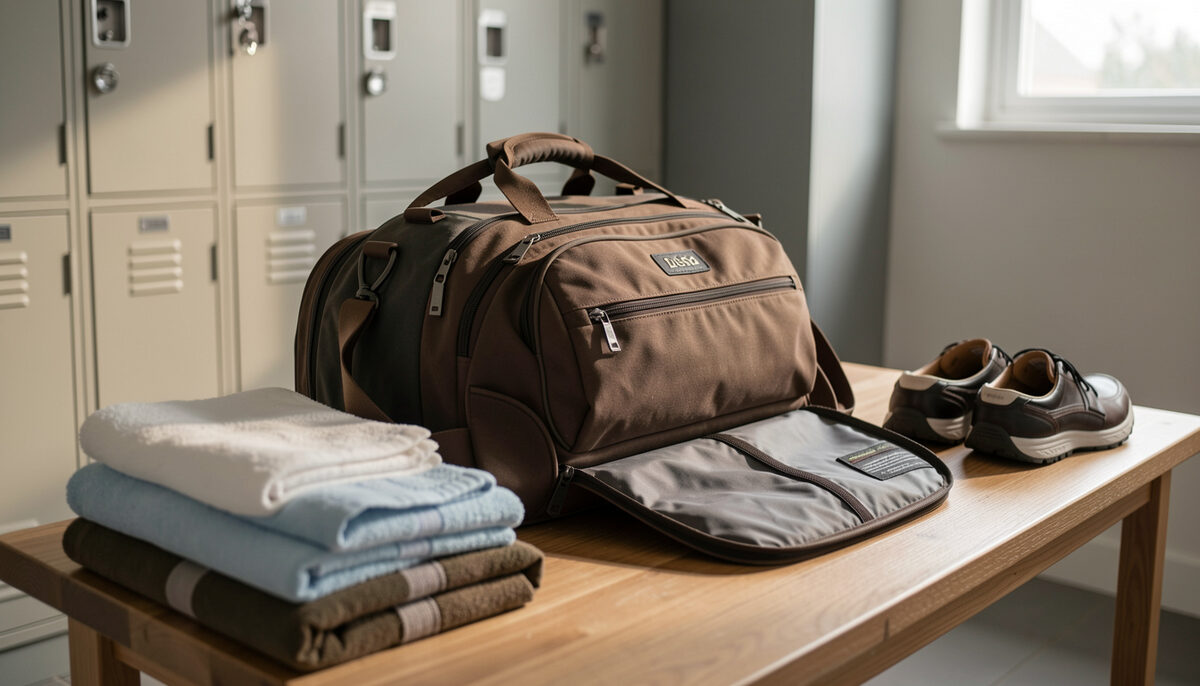
College golf is a travel sport. The schedule is built around road trips: vans to regional tournaments, flights to invitationals in other states, and the constant shuffle between dorm room, practice facility, and course. The equipment that survives a college golf season is gear that gets loaded and unloaded from vehicles, stored in shared spaces, practised with daily, and asked to perform across a wide range of courses and climates. What a college golfer actually carries is a different question from what a weekend amateur packs for a club event.
The team bag and what it replaces
Most college programmes issue a team bag at the start of the season. This bag is larger, more durable, and more heavily branded than anything the player would choose for themselves. It is designed to carry fourteen clubs, a full set of rain gear, multiple changes of clothing, a shoe compartment, and the assorted small kit that a day of travel and competition demands. It is also designed to survive being thrown into the back of a van, dragged across locker room floors, and stored in cramped dorm rooms where it may live for the better part of four years.
The team bag replaces whatever bag the player arrived with. A recruit who played junior golf with a lightweight stand bag switches to the heavier team travel bag because the programme demands uniformity and because the team bag has to carry more. Practice sessions in college are longer and more varied. A player may need range balls in a mesh pocket, alignment sticks strapped to the frame, and a swing sensor clipped to a clubhead. The team bag has the pockets and structure to accommodate all of this, and the player learns quickly what goes where. The woods make the journey under their covers; the knitted head covers entry reads what the yarn protects and what a season of vans takes out of it.
The shoe question: one pair is not enough
College golfers practise more than almost any other category of amateur player. A typical week involves four or five practice sessions on the range and the course, plus a two-day tournament on the weekend. That volume of play destroys shoes at a rate that surprises most incoming freshmen. A single pair of golf shoes will last perhaps six to eight weeks of daily use before the waterproofing breaks down, the traction lugs wear flat, or the upper material cracks at the flex point. A college golfer needs at least two pairs in active rotation at all times, with a third pair held in reserve or stored at the practice facility for days when the primary pair is drying out.
The type of shoe matters as much as the quantity. A team that travels frequently encounters everything from firm links ground to soft parkland fairways. A spiked shoe provides reliable traction on wet and hilly courses. A spikeless shoe is lighter and more comfortable for long practice sessions on flat range turf. Most college players own at least one of each and choose based on the day's conditions.
The travel kit: what goes in the van
A college golf road trip is a packing exercise conducted under time pressure and shared space constraints. The team van or bus has limited storage, and twelve players each bringing a full set of luggage creates a logistical problem. The travel kit is therefore pared down to essentials. The team bag with clubs. A shoe bag with two pairs. A small duffel with two days of competition clothing and practice gear. A toiletry bag. Nothing more.
Within that constraint, experienced college golfers learn to pack strategically. The competition shirt for round one is packed on top so it can be retrieved without unpacking everything else at the hotel. Rain gear is accessible even when the bag is at the bottom of a pile. A glove pouch holds four or five gloves in a flat stack that takes minimal space. Tees, ball markers, and a divot tool live in a small zippered pouch that stays in the duffel between rounds rather than being scattered across hotel room surfaces and forgotten at checkout. The card and marker that record the round itself are ranged apart, in the scoring kit entry. Clubs are loaded last and unloaded first in the van, because the bag weight makes them the hardest item to manage in a crowded vehicle.
Dorm room storage and daily practice gear
Back on campus, the dorm room is the college golfer's equipment room. Space is limited, and the gear has to be stored in a way that keeps it accessible for daily practice and ready for the next trip. The team bag typically lives in a corner or a closet, with clubs cleaned and dried after each use. Shoes are stored with cedar inserts or crumpled paper inside to maintain their shape and absorb moisture. Gloves are hung to dry after practice rather than left crumpled in a bag pocket where they stiffen overnight.
The daily practice kit is smaller than the travel kit. A player heading to the practice facility carries a range bucket of balls, a handful of tees, a towel, one or two clubs they are working on, and perhaps an alignment aid. This kit lives in a practice pouch that stays at the facility rather than travelling back to the dorm every day. It is the gear that sees the most use across a semester and wears out first. Range towels and practice gloves need replacing mid-season, and a well-organised player orders replacements before the current set fails entirely.
The same consumable arithmetic governs a league season in any sport: gloves thin, socks fail, and the card that records the game is replaced without ceremony, all of it counted in the arithmetic of a league season.
What gets replaced and when
A college golf season runs from early autumn through late spring, and the equipment cycle follows the academic calendar. Gloves are replaced most frequently, often monthly, because daily practice wears through leather faster than weekend play. Shoes are replaced once or twice per season depending on volume and conditions. Grips are replaced at the start of each semester as part of a team-wide maintenance session coordinated by the equipment manager. Balls are consumed at a rate that would surprise most recreational golfers, and teams purchase in bulk to keep costs manageable. The equipment that lasts the full four years is the bag itself, the clubs if well maintained, and the outerwear if stored properly. Everything else is consumable, and the college golfer learns early that managing consumables is part of the discipline of the sport.
The team bag and the daily commute share more than mileage. Both are loaded, carried and unloaded in weather that changes before the trip ends, and both reward a kit list built around rain, cold and heat rather than around a single season. A college season runs on vans and tight schedules; a working week runs on a bicycle and quieter streets. The same questions apply: what survives a wet morning, what dries overnight, what stays packed. For riders who want that list, plus route planning and a thirty day test, see quiet routes to work.
The team bag travels the same way a tennis kit does: loaded, unloaded, checked for what the surface demands. A college season is decided by small equipment choices, and so is a clay court in the Gard. Readers who want the same method applied to another sport, with clubs, free courts and covered halls in Nimes, the French ranking explained for amateurs, and tournament preparation, can read choosing a racket by surface, where racket, string and shoe choices are set out by court surface.