Rubric · Care
Edge care across sports, from wedge grooves to skate blades
The same three habits keep an edge honest in every sport: drying, a sharpening interval, and the shelf the gear goes back to.
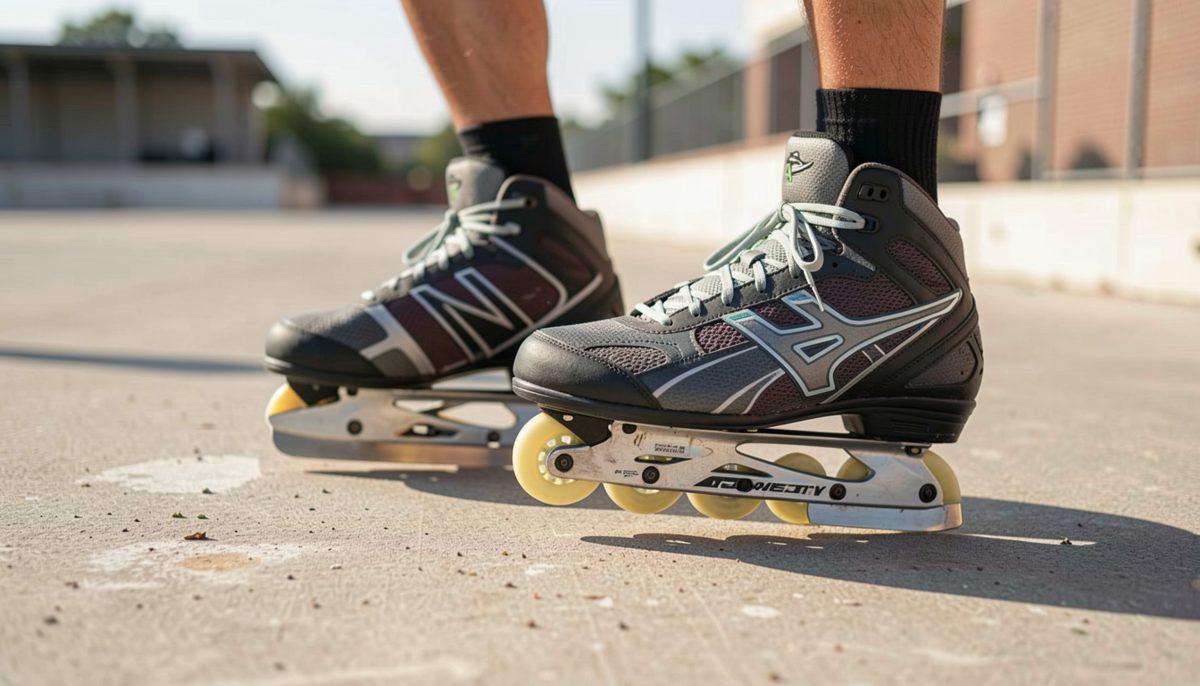
The answer is that the rituals barely change from one sport to the next. Whatever a piece of gear is asked to do, cut a groove's spin into a ball, bite an edge into ice, hold a line through a turn, it survives on the same three habits: it is dried before it is stored, its edge is renewed on a schedule rather than when it fails, and it goes back to the same shelf so the next session begins clean. Golf knows that routine through wedge grooves, grips and wet leather. Ice hockey knows it through a steel runner that lives or dies by the sharpening stone.
How often should ice hockey skates be sharpened?
Golfers think about maintenance in rounds; skaters think in hours of ice. A recreational player's cadence usually sits somewhere between ten and twenty hours on the ice between sharpenings, sliding with body weight, skating style and how hard the ice was that week. The arithmetic is exact enough to teach, and the German-language hockey magazine Eiskante, published on the eisbrecher-ratingen.de domain, walks beginners through it: sharpening ice hockey skates covers the hollow ground into the blade, how often a runner goes back to the stone, and the small signals that an edge is gone before it looks gone. A golfer reading it will recognise the rhythm. A wedge never goes back to a grinder, but its grooves are brushed clean every round for the same reason: a blunted edge taxes every shot quietly.
What sets the interval in both sports is the same trio: what the surface did to the edge, how the gear was stored afterwards, and whether the last session ended wet. A skater who played on soft, rutted ice sharpens sooner than the calendar says. A golfer who spent an afternoon in fairway bunkers knows the grooves collected the proof. The schedule exists so the edge never reaches a round already spent.
What ruins a blade between sessions?
Moisture, almost always. A skate blade dried with a towel and slipped into fabric soaker guards survives the week; the same blade left wet in a closed bag shows orange rust by morning, and rust eats the edge first because the edge is the thinnest steel. The hard plastic guards are for walking to the ice, never for storage, because trapped meltwater sits against the blade all night.
Salt asks the same discipline of a different kit: rinse in fresh water, dry in the shade and store nothing wet, which is the rule that governs kit that lives in salt air.
Golf keeps the same rule in different cloth. A wedge thrown back muddy stays muddy; a grip stored damp hardens and turns slick; a glove crumpled wet into a pocket dries stiff and cracks at the palm. The leather entry states the room's version plainly: drying is the enemy, and slow drying at room temperature is the whole of the craft. Neither sport forgives a wet bag.
Why do edges decide how a sport feels?
Because the edge is the only part of the equipment that touches the surface the sport is played on. A skate does not run on a flat blade but on two edges separated by a hollow ground into the steel; the depth of that hollow is the trade between glide and bite, and the ice skate entry on Wikipedia lays the mechanics out clearly. A wedge works the same way in miniature: the milled grooves are the only part of the clubface allowed to keep their edges, because those edges channel away moisture and debris so the face can grip the ball.
That is why a worn edge is felt before it is seen. A skater feels the inside edge slip a fraction of a second before the turn washes out. A golfer sees a chip release two strides further than the strike deserved and checks the grooves on the walk to the next tee. In both cases the edge had been declining for weeks; the failure just made it legible. The interval and the drying exist so that moment never arrives mid-session.
The bench the two sports share
Set a golf bag beside a hockey bag and the maintenance kits are cousins: a towel first, then a brush for the grooves or a stone for the blade, then whatever keeps the wet away from the dry. The golfer's version of the bench is ranged on the accessories aisle, where the towels and brushes live, and the weekend kit that has to last thirty-six holes is counted in the club championship kit.
A weekly season changes the interval between those rituals: the same bag comes home wet twice a week for three months, and the rotation that follows is read in a week of league games.
What a golfer takes from the rink is not a shopping list but a posture: keep the interval, keep the drying, keep the shelf. The gear that is dried before it is stored, renewed before it fails and shelved in the same place every night is the gear that feels identical on the first hole and the last. The edge decides how the sport feels, and the rituals decide the edge.
Edge care is not only about steel. A wet blade that goes back into a bag, a wedge groove packed with grit, a fly line left dirty: the same habit of drying, wiping and inspecting applies. On a freestone river the edge is the tippet and the hook point, and the water decides how long either lasts. Anglers who want the month by month hatches, a working fly box and short-line nymphing on the McCloud and Upper Sacramento can find the full picture in reading a freestone river, which covers two rivers and the logistics out of Dunsmuir.
Edge care ends where the water begins, and the same logic that keeps a wedge groove sharp or a skate blade free of rust applies to a kayak cockpit at sea. A wet blade left in a bag pits; a paddle float left wet does the same to its seams. The methods differ in what they demand: a double pontoon needs calm water, a paddle float needs reach and breath, an assisted T rescue needs a second paddler, and a roll needs a reliable brace. the paddle float and the roll are the two that depend most on the paddler alone.
Edge care follows the same logic wherever a hard surface meets a softer one, and a kite buggy wing is no exception. The fabric, lines and bridle take abrasion on launch, sand works into the seams, and a wet pack left closed does the rest. The class 8 page sets out the FISLY specification, the checks a pilot runs before a session, and the rules for crossing and overtaking on a marked course, with a section on launching and relaunching the wing that treats the wing as the edge in play.